What Happens After a Car Accident?
4/18/20266 min read
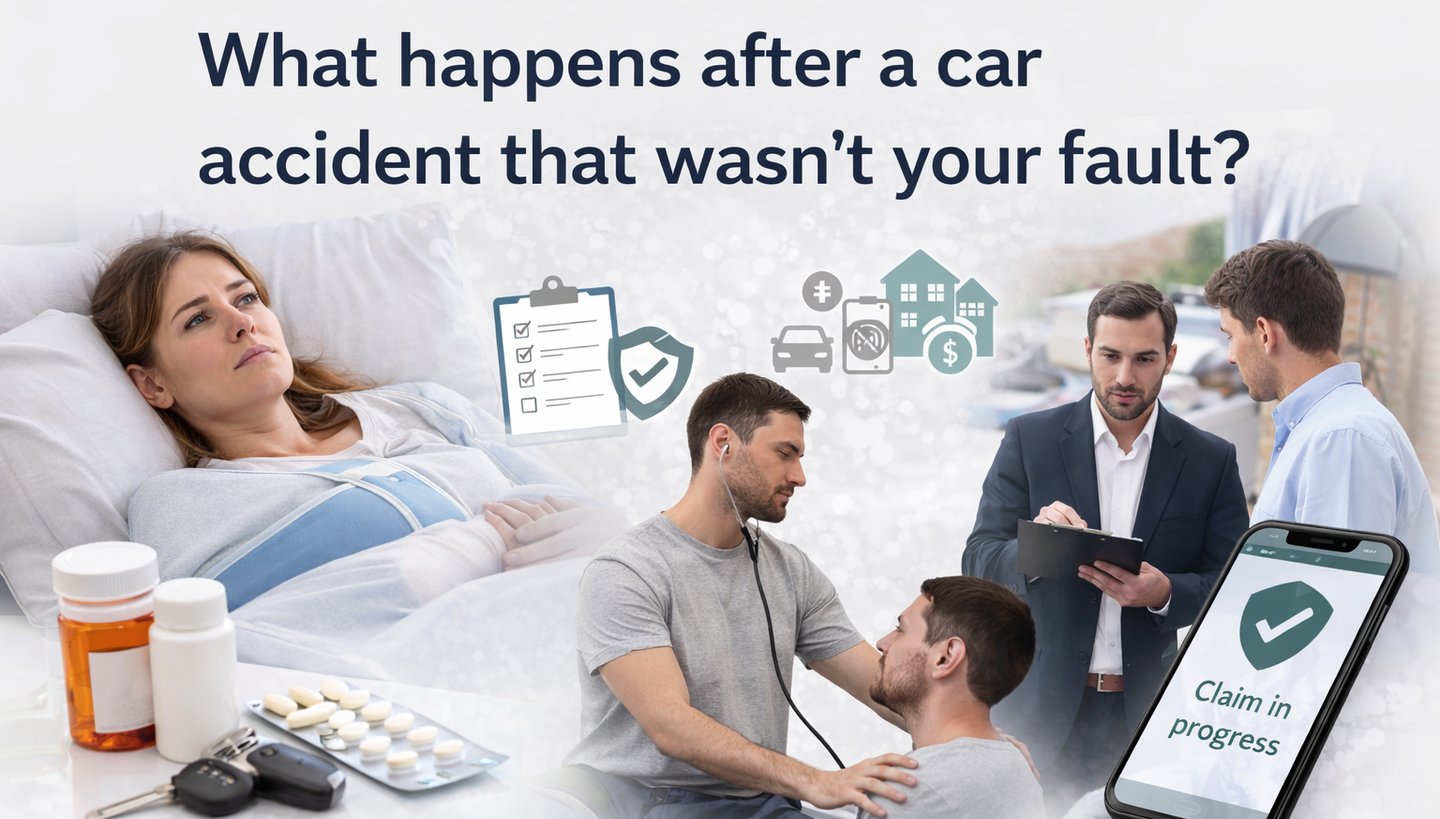
What Happens After a Car Accident That Wasn't Your Fault?
Been in a car accident that wasn't your fault? Here's exactly what to do, step by step and what NOT to do. From a Bolton personal injury solicitor.
Focus keyword: what happens after car accident not my fault
---
You've just been in a car accident. You're shaken up, maybe in pain, and you know it wasn't your fault. The other driver ran a red light, rear-ended you, pulled out without looking â whatever happened, you're the innocent party.
So what now?
I'm Chris Hutchinson, a personal injury solicitor in Bolton. I've helped hundreds of people through this exact situation, and I've been through it myself as an injured claimant. Here's exactly what you need to do â and what you absolutely should not do.
Step 1: At the Scene Safety First
Before anything else:
Check yourself and your passengers for injuries. Adrenaline masks pain. Just because you feel okay doesn't mean you are.
Move to safety if you can. Get off the road if possible.
Turn on hazard lights.
Call 999 if anyone is seriously injured or if there's a danger to other road users.
Don't try to be a hero. Don't move someone with a suspected spinal injury. Wait for the emergency services if there's any doubt.
Step 2: Exchange Details
You need to swap information with the other driver. Get:
Full name
Address
Phone number
Insurance details (insurer name and policy number)
Vehicle registration number
Make and model of their vehicle
Give them the same information. You're legally required to do this under section 170 of the Road Traffic Act 1988. If the other driver won't give their details or drives off, call the police immediately and note down their registration.
Step 3: Gather Evidence
This is where most people fall short, and I can't stress enough how important it is. While you're at the scene:
Take Photos
Damage to all vehicles involved
The road layout, any road markings, traffic signs
Skid marks or debris on the road
Weather and visibility conditions
Your injuries (bruises, cuts, swelling) even if they seem minor
Get Witness Details
Anyone who saw what happened other drivers, pedestrians, people in nearby shops. Get their name and phone number. Witness evidence can make or break a claim when liability is disputed.
Note the Circumstances
As soon as you can, write down exactly what happened. Where you were, what direction you were travelling, what the other driver did, what you saw, what you heard. Memory fades fast â details you remember clearly today will be fuzzy in a month.
Dashcam Footage
If you have a dashcam, save the footage immediately. Don't let it overwrite. If you don't have a dashcam get one. Honestly, they're the single best investment for any driver. I recommend them to every client.
Step 4: Report to the Police (If Required)
You must report the accident to the police within 24 hours if:
Anyone was injured
The other driver didn't stop or provide details
You suspect the other driver was under the influence of alcohol or drugs
There's damage to property other than the vehicles involved
Even if reporting isn't strictly required, having a police report on file can help your claim. It's an independent record of what happened.
You can report at a police station or by calling 101 (non-emergency).
Step 5: See Your GP As Soon as Possible
This is critical. Even if you think your injuries are minor, see your GP within a few days of the accident. Here's why:
1. It creates a medical record linking your injuries to the accident. Without this, the insurer will argue your injuries weren't caused by the crash.
2. Some injuries develop over time. Whiplash often doesn't fully hit until 24â72 hours after an accident. Back injuries can worsen over days.
3. You might need treatment physiotherapy, pain management, referrals to specialists.
4. It shows you took your injuries seriously. If you waited three months to see a doctor, the insurer will use that against you.
Tell your GP everything. Every symptom, no matter how minor it seems. Headaches, neck pain, back pain, sleep problems, anxiety about driving â all of it. If it's not in your medical records, it's harder to claim for.
Step 6: Contact a Personal Injury Solicitor
You don't have to do this on day one, but don't leave it too long. The sooner I'm involved, the sooner I can:
Preserve evidence before it disappears
Advise you on what to do and say (and what NOT to say)
Start the claims process while everything is fresh
Arrange medical examinations with independent experts
Protect your interests when the insurer comes calling
I offer a free initial assessment. You tell me what happened, I tell you whether you have a claim and what it's likely worth. No charge, no obligation.
As a No Win No Fee solicitor, if I take your case, you don't pay anything upfront and you don't pay anything if we lose.
Step 7: Keep a Record of Everything
From the day of the accident onwards, document everything:
Symptom diary. How you're feeling each day, pain levels, what you can and can't do.
Time off work. Dates, lost earnings, any sick pay you received.
Expenses. Prescriptions, over-the-counter medication, parking at hospital, taxi fares to appointments, anything the accident has cost you.
Impact on your life. Can't play with your kids? Can't exercise? Can't drive without anxiety? Can't ride your motorbike? Write it down.
Keep receipts for everything. Every pound you spend because of this accident is potentially claimable.
What NOT to Do After a Car Accident
This section might be the most important part of this entire post. I've seen people damage their claims â sometimes fatally by doing these things.
Do NOT Accept an Early Offer from the Other Driver's Insurer
The other driver's insurance company will contact you. They might seem helpful. They might offer you a quick settlement a few hundred or a couple of thousand pounds to "sort things out."
Do not accept it.
These early offers are almost always a fraction of what your claim is actually worth. The insurer is betting that you don't know the value of your claim and that you'll take the quick money. Once you accept, that's it. You can't come back for more when you realise your injuries are worse than you thought.
I've seen people accept £1,500 for injuries that were worth £15,000. It makes me angry every time.
Do NOT Give a Recorded Statement Without Legal Advice
The insurer might ask you to give a recorded statement about what happened. They'll be friendly about it. "Just so we can understand the circumstances."
What they're actually doing is looking for anything they can use to reduce or deny your claim. A poorly worded answer, an inconsistency, an admission you didn't even realise you were making.
You are not legally obliged to give a recorded statement to the other side's insurer. If they ask, tell them you'd like to speak to a solicitor first. Then call me.
Do NOT Post About the Accident on Social Media
I know it's tempting. You've been in an accident, you want to tell people what happened, you want sympathy.
But insurers check social media. If you post about being in pain and then the next week there's a photo of you at a party looking fine, they'll use it against you. If you post details about the accident, they might contradict your formal account.
My advice: say nothing on social media about the accident, your injuries, or your claim. Nothing. Until it's settled.
Do NOT Delay
You have three years from the date of the accident to issue court proceedings. That sounds like plenty of time, but it goes faster than you think, and late claims are harder to prove.
Evidence degrades. Witnesses forget. CCTV gets deleted. Medical records are clearer when the injuries are fresh.
The earlier you start, the stronger your case.
Do NOT Ignore Your Injuries
"It's just whiplash, it'll go away." Maybe. But maybe it won't. And if you don't get it documented and treated, you're leaving compensation on the table.
More importantly, injuries that seem minor can become chronic. I've seen clients whose "minor" neck pain turned into disc problems requiring surgery. Early treatment and documentation protects both your health and your claim.
If your injuries go beyond simple whiplash, the compensation can be significantly higher â read my post on whiplash compensation to understand the difference.
The Claims Process: What Happens Next
Once you've instructed me, here's the general process:
1. I notify the other side's insurer through the Claims Portal or by letter of claim
2. They investigate liability and (hopefully) admit fault
3. You attend a medical examination with an independent expert I arrange
4. We calculate your full losses, injury compensation plus all financial losses
5. We negotiate a settlement, I handle all communication with the insurer
6. You receive your compensation â typically within 28 days of settlement
Most straightforward car accident claims settle within 6-12 months. More complex cases take longer, and I'll be upfront about timelines from the start.
I've covered this in more detail in my post on how long personal injury claims take.
You've Got Enough to Deal With
Being in a car accident is stressful enough without having to navigate the legal process on your own. That's literally what I'm here for. I handle the claim, chase the insurer, argue the value, and get you the compensation you're entitled to.
You focus on recovering. I'll handle the rest.
Whether you're in Bolton, Manchester, or anywhere across Greater Manchester, I can help with your car accident claim.
Get in Touch Today
Call me: 01204 263147
Fill out my quick form: Contact form
Email: mail@insonlegal.co.uk
Free initial assessment. No Win No Fee. No pressure.
Chris Hutchinson, Inson Legal - Personal Injury Solicitor, Bolton
© 2026. All rights reserved.
Inson Legal Limited registered address Inson Legal, St Peter's House, Silverwell Street, Bolton, BL1 1PP. Main practising address Mill of Old Mains, Alford, AB33 8RN. Inson Legal Limited trading as Inson Legal is authorised and regulated by the Solicitors Regulation Authority 8011113




Inson Legal Limited, St Peter's House, Silverwell Street, Bolton, BL1 1PP